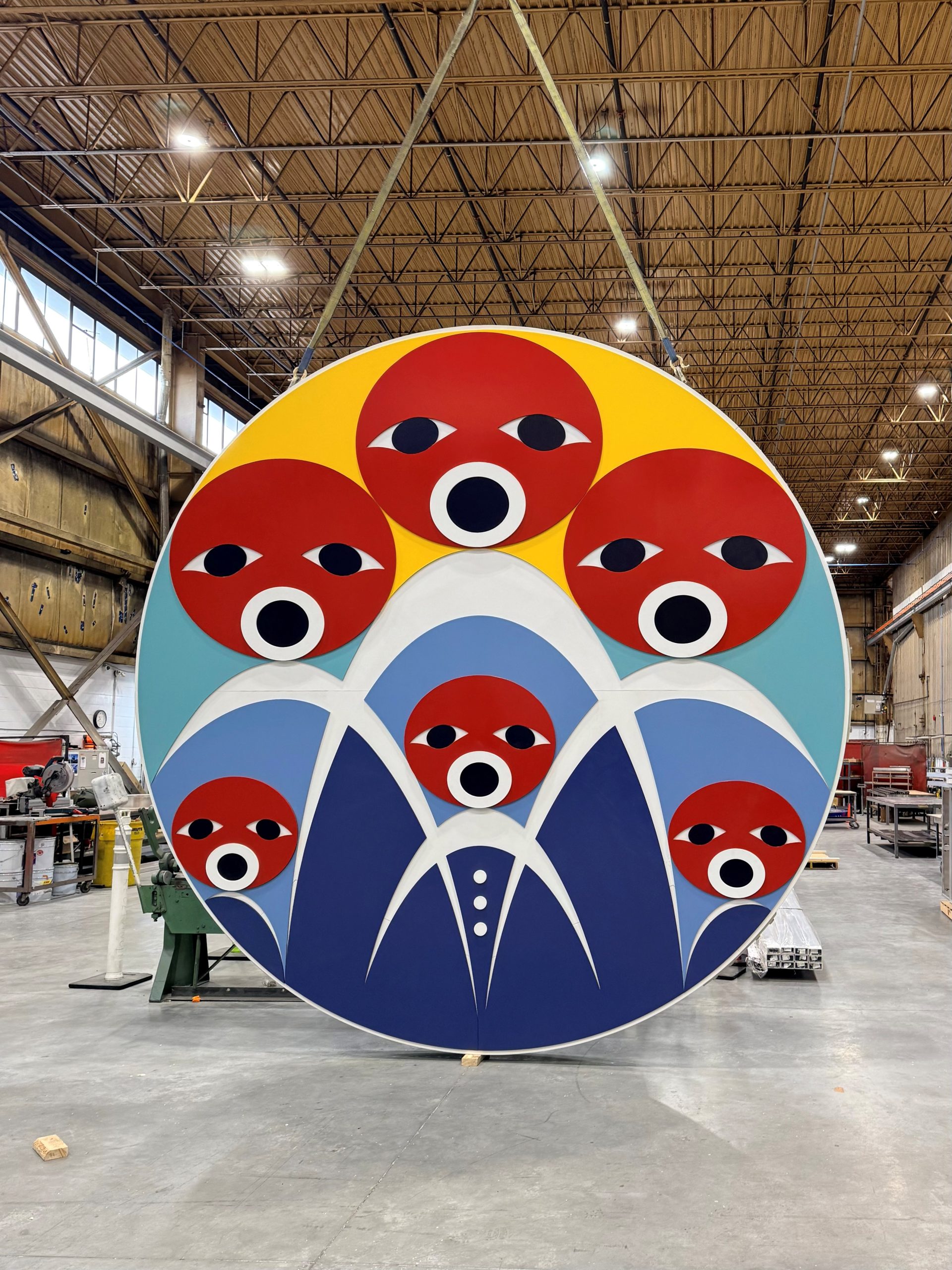
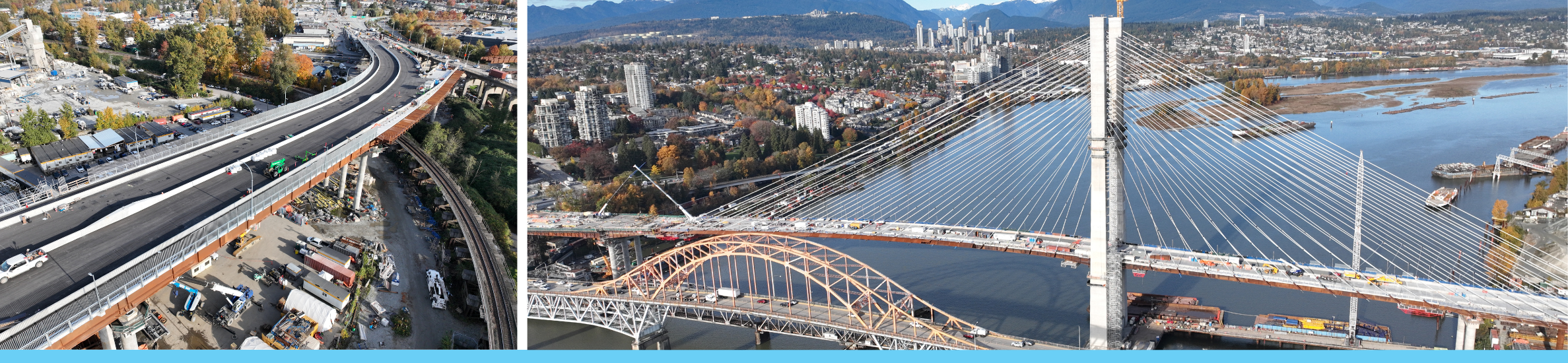
To recognize the deep historical and ongoing connections of First Nations to the bridge area, First Nations artwork is being integrated into Project elements both on and off the stal̕əw̓asəm (Riverview) Bridge. Artwork will be featured in six locations on the bridge structure, including the crossbeam and the upper and lower bridge tower.
Seven artists are contributing on-bridge artwork. Explore their artwork and the meaning behind each piece below.
Check back for more information as artwork is installed!
Upper Crossbeam
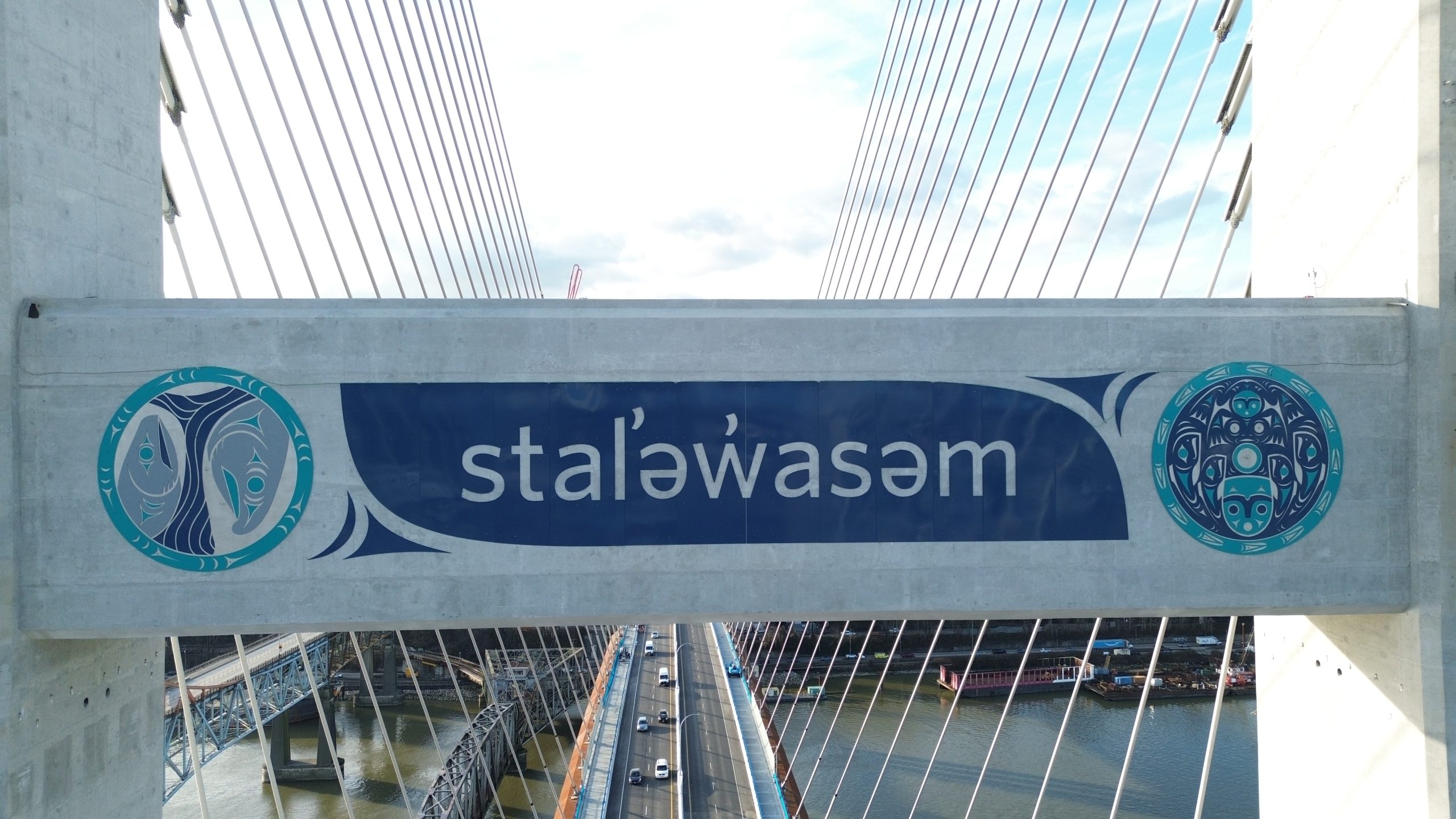
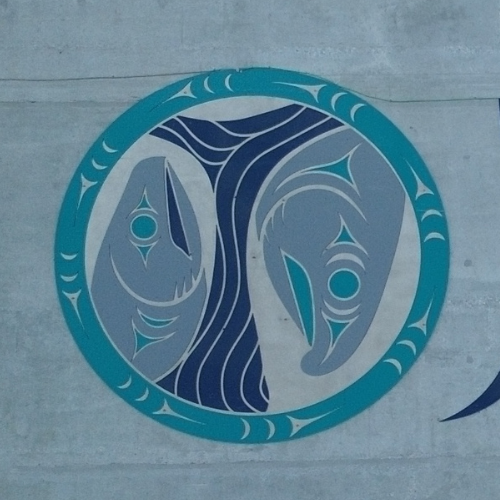
Four artwork medallions have been installed on the upper crossbeam of the stal̕əw̓asəm Bridge. Musqueam artist Chris Sparrow and Kwantlen artist Atheana Picha each designed one medallion featured on both the north and south-facing sides of the crossbeam.
Both designs hold significant cultural meaning, shared in artist statements below.
The upper crossbeam medallions are 4-metre-diameter circular artworks, fabricated locally in Delta, BC. Each medallion consists of a powder-coated aluminum art layer mounted to a steel backing plate, allowing it to sit flush against the concrete surface.
About the artist: Atheana Picha
Atheana Picha is a Coast Salish artist from the Kwantlen First Nation and her grandmother was from the Tsartlip First Nation. Atheana carries the name Nash’mene’ta’naht meaning “Go-Getter woman” given to her by Gerry Oleman from Tsal’alh, and also carries the name Xwii Xwa meaning “echo” given to her by Shane Pointe from Musqueam.

Atheana began learning wood carving from Squamish artist Aaron Nelson-moody in 2018, and she began learning wool weaving from Musqueam weaver Debra Sparrow starting in 2020. She is a multidisciplinary artist, working in traditional and digital media, and public art.
She studied at Langara college from 2017-2020, working primarily in ceramics and printmaking. Atheana is also the two-time recipient of the YVR Art Foundation Emerging Artist scholarship, and the Bill McLennan Masterpiece Study Program Travel Grant. Atheana has shown work internationally at the American Museum of Natural History in New York, USA, and at the Museum of Anthropology and Archeology in Cambridge, England. She spends her time learning from her elders and teachers, learning on the territory, and learning from the ancestral belongings in museums.
Artist Statement
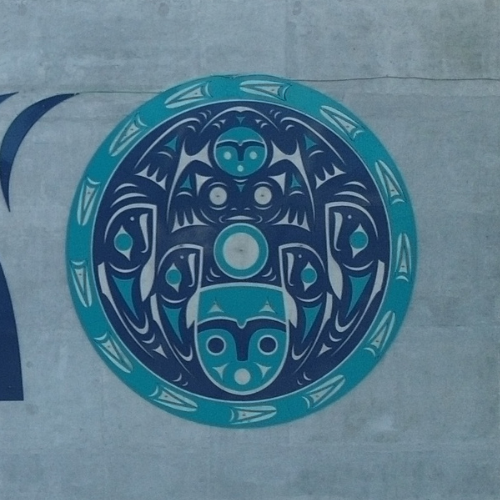
This piece is to echo Coast Salish spindle whorls with the hole in the centre, tools to transform woolly dog fur and mountain goat hair into yarn for our weavings. Centred around transformation, are 4 salmon and a frog, with a face at the bottom and a face in the frog’s body. These figures are to reflect the spirit of the environment, the spirits of our ancestors, and one of the pilar beings that sustain us, salmon.
Around the outside ring is 13 extended crescent shapes, for the 13 moon cycles. Living by the cycles of the moon, letting nature tell time for us, is a reminder that we are not stronger than mother earth, and a reminder of our responsibilities to look after our home.
The colours on this piece are connected to the collaborative element to this work. This bridge crosses over our traditional primary way of travel, so to honour it through choosing blues was an important element.
The iconography used on this design is Coast Salish design language, which is specific to this part of the world. We use crescents, ovals, and trigons, to narrate our history and share our connections to our territory and each other. -Atheana Picha
About the artist: Chris Sparrow
Chris Sparrow is a well-known Musqueam First Nation artist in British Columbia, Canada. He was born in Vancouver in 1984 and comes from a family of artists. Sparrow is self-taught, and creates contemporary pieces inspired by traditional Coast Salish art. He works with a variety of mediums, including wood, metal, and glass.

Sparrow’s artwork often features traditional Salish designs, such as animals, birds, and nature elements, but he also incorporates modern elements into his pieces. His work is highly sought after by collectors and has been featured in various galleries and exhibitions.
Sparrow is actively involved in his community and works to promote awareness and appreciation of First Nations art and culture. He has worked with local schools to teach students about Coast Salish art and has participated in various cultural events and celebrations.
Artist Statement
Title: stal̕əw̓/Salish Salmon River
Musqueam people have a strong connection to the salmon, which has been a vital part of their culture and way of life for thousands of years. There are many legends and stories about the salmon in Musqueam culture.
According to a Musqueam legend, the first salmon was created by the transformer Xaays, who was a powerful and important figure in Musqueam mythology. Xaays created the first salmon by transforming a young boy, and he then released the salmon into the rivers and streams to provide food for the people.
Musqueam people have many rituals and ceremonies that are associated with the salmon, such as the first salmon ceremony, which is held to honor the first salmon of the season. During the ceremony, the people give thanks to the salmon for its sacrifice and for providing sustenance for the community.
Salmon is also an important symbol in Musqueam art, and many traditional designs feature images of salmon. The salmon is often depicted swimming upstream, representing the perseverance and determination of the Musqueam people.
The legend of the salmon is a powerful reminder of the deep connection between the Musqueam people and the natural world, and of the importance of respecting and honoring the natural resources that sustain us. –Chris Sparrow
Upper Bridge Tower
Two artwork medallions have been installed on the upper bridge tower of the stal̕əw̓asəm Bridge. Kwantlen artist Elinor Atkins and Musqueam artists Thomas and Summer Cannell designed the medallions to be installed on both the upstream and downstream-facing sides of the tower.
Read the artist statements below to learn more about the meaning behind the medallion designs.
Both upper tower medallions are 4 metres in diameter and were fabricated locally in Delta, BC. Each medallion consists of a powder-coated aluminum art layer mounted to a steel backing plate, allowing it to sit flush against the concrete surface.
About the artist: Elinor Atkins
Elinor Atkins (Miməwqθelət, “the first bird to sing in the morning”) is a member of the Kwantlen First Nation, with Nɬeʔkepmx / Syilx heritage through her family roots in Shackan First Nation in the Nicola Valley.
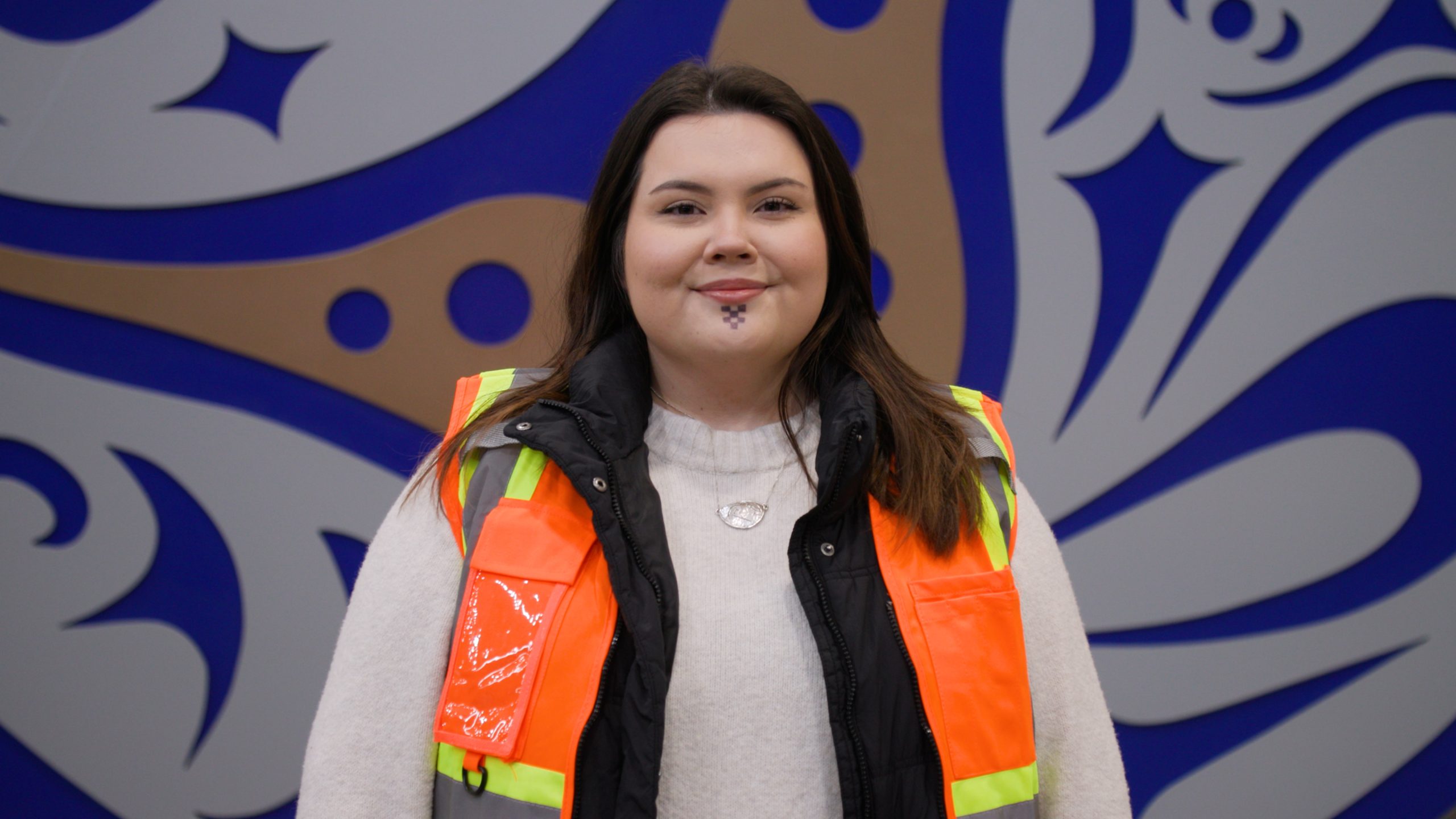
Her works draw from the traditional teachings of the Coastal and Interior Salish culture, and a deep connection to the land and water. She creates in different mediums including illustration, painting, printmaking, wood carving and public art installation.
Her artistic style represents a distinctive blend of traditional Salish design principles and contemporary influence, integrating vibrant colour palettes with intricate depictions of botanicals, wildlife, and cultural teachings; creating works that honour ancestral knowledge while engaging with modern aesthetics.
Artist Statement
Title: The First Sturgeon
This design is grounded in the creation story of sweyq̓eʔ and sɬenəy̓, the first male and female sturgeon. This story of their transformation reflects enduring relationships between the Kwantlen people, the land, and the water. Through this couple’s love and responsibility for the Kwantlen people- sweyq̓eʔ and sɬenəy̓ sacrificed themselves for the wellbeing of their community and future generations, during a time of famine- becoming qʷtɑyθən, the white sturgeon; now recognized as the Elders of the river.
The area surrounding qiqéyt, near the Pattullo Bridge, is an important over-wintering site for our white sturgeon and was once home to a shared Kwantlen fishing village. This place continues to hold deep ancestral memories. The medallion acknowledges these connections and honours the kinship and presence of Kwantlen families whose roots remain tied to this river.
This story was shared with me throughout my life by my Maternal Aunt Sesmelot, a storyteller and language keeper. The imagery came to me in a dream where sweyq̓eʔ and sɬenəy̓ were moving through murky water at a riverbed; their bodies shifting between human and sturgeon, their eggs entwined between them. This design gives form to that vision. It places an ancestral story back into the landscape it comes from & offers a way for people to connect with the river not only as a physical crossing, but as a place shaped by deep history, shared responsibility, and ongoing life. -Elinor Atkins

About the artists: Thomas and Summer Cannell
Thomas Cannell draws constant inspiration and influence from his connection to family and friends in their traditional Musqueam homeland. His commitment to the arts is also reflected in his mentorship of emerging artists and his participation in community-based projects that celebrate Coast Salish heritage. He frequently collaborates with local organizations to create culturally significant installations, fostering a greater appreciation for Indigenous art and values among diverse audiences.
Through educational workshops, artist talks, and collaborative endeavours, Thomas continues to inspire the next generation of artists to honour their roots while embracing creative evolution. His work is not only recognized for its aesthetic beauty but also for its role in advancing dialogue on reconciliation and cultural preservation.
By integrating traditional motifs with contemporary techniques, Thomas bridges past and present, ensuring the enduring legacy of Coast Salish artistry. His ongoing contributions help to strengthen the visibility of Indigenous artists in Canada and beyond, amplifying the voices and stories of his community.
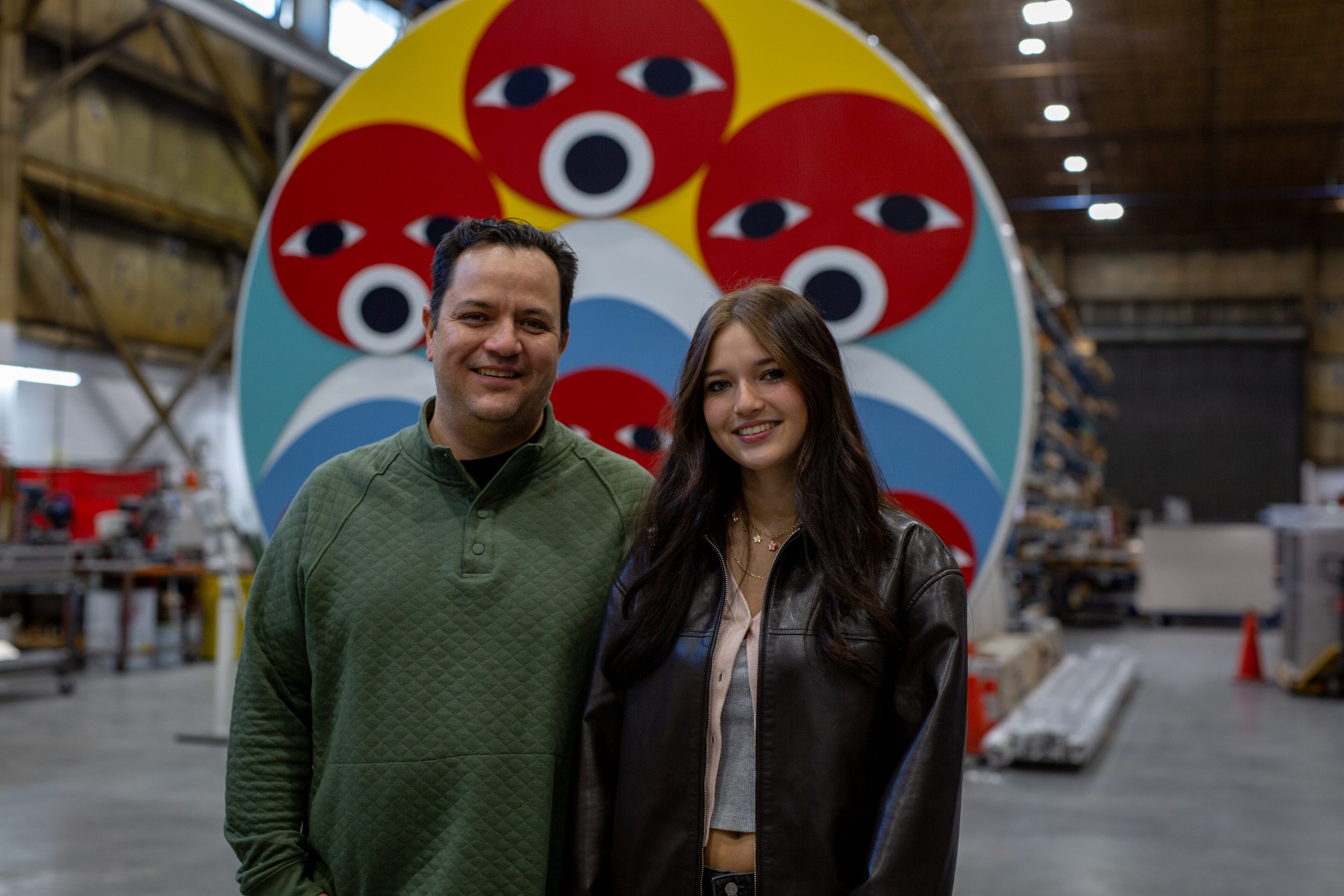
Summer Cannell is a second-year Visual Arts student at UBC, deeply connected to her Musqueam heritage. Inspired by her family’s artistic traditions, she began collaborating on public art at age 12, with works now displayed at YVR and UBC.
As a UBC Development and Alumni Engagement Ambassador and Presidential Scholar Award recipient, Summer fosters community and shares her passion for art and culture. Her goal is to integrate Musqueam teachings into public view across her territory. Summer also excels in figure skating, recently leading as captain of the BC Junior Synchronized Skating Team.
She was honoured with the 2024 Premier’s Award for Indigenous Youth Excellence in Sport for her leadership and inspiration. Summer Cannell exemplifies excellence in heritage, art, and sport, inspiring her community on campus and beyond.
Artist Statement
Title: A Timeless Journey
As artists deeply rooted in Musqueam culture, our practice centres on passing down ancestral knowledge and teachings to uplift and protect the next generation. Our artwork medallion symbolizes connection, learning, and care for our young people, honouring the wisdom that shapes our community and guides future generations.
This artwork also represents our commitment to the sacred responsibility of being stewards of the environment. The layered motifs illustrate the interdependence between people, culture, and the land.
We chose contemporary colours symbolizing hope, renewal, and resilience. Vibrant blues evoke the promise of thriving waterways, hazy green represents sustaining forests, and radiant reds and yellows signal strength and continuity. Together, these hues point toward a future where our teachings, youth, and environment are cherished and safeguarded across all cultures. – Thomas and Summer Cannell